
Without a doubt, Guillermo Prieto's poems are among the most renowned in Latin American literature. In this article, we present his biography, works, poems, and more.
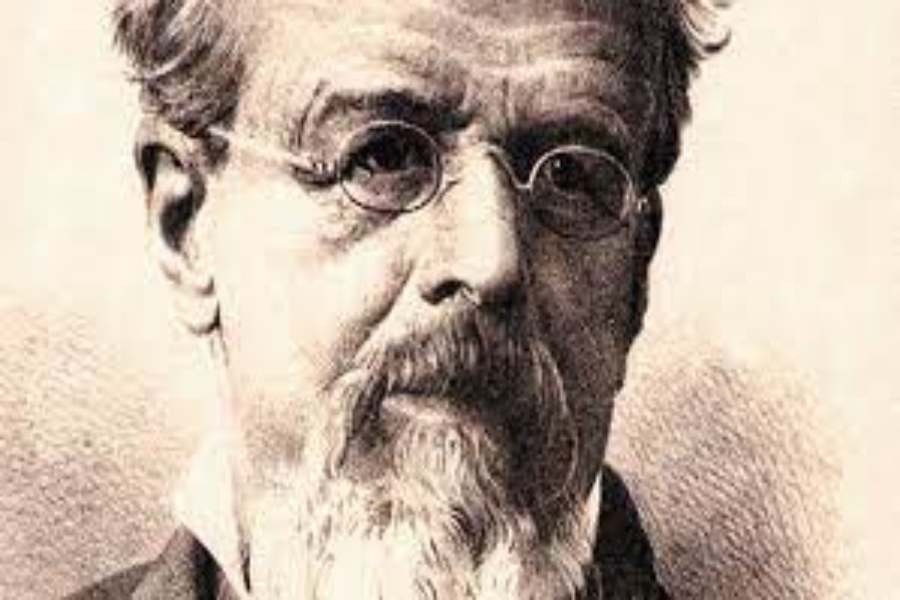
Guillermo Prieto was also known as the poet of the people.
Poems by Guillermo Prieto and who is he?
Guillermo Prieto is a Mexican writer and politician, also known as the people's poet, and a hero of reform, a public service he performed until he was left in poverty. As a teenager, Prieto, at just 13 years old, his father died, and his mother was mentally affected, leaving him practically orphaned. However, under the tutelage of Eligio Quintana Roo, he was guided and assisted in his studies and in obtaining his first job at the customs office.
As is already known, Prieto began to write and actively participate in Mexican politics, while he exercised political life, he has some memorable writings that define him as one of the best poets in Mexico for the time. Among his books are 3 poems and several prose texts.
Guillermo Prieto from a very young age was attracted by literature, history and politics, so he began to realize his dreams little by little, so it was that in 1837 he made his way into the field of letters in media such as El Mosaico Mexicano and Galán Calendar, where he published his first verses.
In 1836, in the company of Quintana, he began with the Academy of Letters whose main objective was to Mexicanize literature, he began to publish his own poetry, collaborating as an editor in the different journalistic and literary publications. In addition to this, he also developed in the area of theater working together in the area of politics.
On the other hand, in his political life he also participated in the Liberal Party and in turn expressed his opposition to the administration of the then President Antonino López de Santa Anna, for which he joined the Help Plan, which had the main function of putting a stop the dictatorship in the presidency of Santa Anna.
In the same way, Guillermo enlists in the National Guard in the first intervention of the United States, joining the defense of the federal army with the first French incursion into Mexican soil. In several web pages you can find one of his works, "memories of my times" in which you can read each of the pages of his works.
As for his literary work, he decided to continue consolidating his career during the 1840s, publishing his prose work called Alonso Ávila, in addition to his journalistic works are El Museo Mexicano and El Semanario Ilustrado.
He began his political career as an official in the governments of Presidents José María Valentín Gómez Farías and Anastasio Bustamante, and also began writing for the Official Gazette.

In 1838 he enlisted in the Military Service: it was the time of the Pastry War, a conflict between France and Mexico.
Literary style of the poems of Guillermo Prieto
The style of literature applied by the Mexican, was noted for the use of a simple and clear language, well written and understandable, his works have features of current romanticism and of course he developed a theme focused on the customs, history, culture and characters of his country.
He was a fan of describing the qualities of each town, its culture, and customs. He often focused on the town's clothing and food. He is one of the most regionalist writers of both his time and his native country. His strong affinity for his country catapulted him to the forefront of his work.
His literary style is composed of popular verses, as stated above, highlighting Mexican folklore music, exposed in his work as the Romancero. On the other hand is the romantic side, author of numerous articles published in the magazine El Siglo XIX.
In this video, you will be able to reinforce the knowledge of the biography about the life of Guillermo Prieto, you will be able to inform yourself about everything, death and more.
His literary work, according to specialized critics, is characterized by a style attached to romanticism, highlighting a chronicle of the social, political and literary life of 19th-century Mexico, entitled "Memories of My Times" and some articles on customs that he published in various newspapers of his time.
Likewise, his dramatic texts "El alférez", "Alonso de Ávila" and "El susto de Pinganillos". As for his poetic work, it is divided into patriotic compositions and popular verses inspired by folklore. In addition, imitating the poetry of the popular Spanish era, he extolled the culminating events of Mexico's struggle for its freedom during Independence, in "El balladro".
Poems of Guillermo Prieto and his works
One of the most visited bookstores by Prieto was the José María Andrade Bookstore, which is located in Mexico City, in the historic center of the capital.
This was where he began to be inspired to make his works because he saw for sale Literary Art in Mexico, by the Mexican nationalized Spaniard Enrique Olavarría. Likewise, this aforementioned book has as its main pillar the humanistic side in the country, it is a cocktail between journalism, literary evenings, schools, health and literary societies, poetry and the leaders of that time.
In his writings, Prieto stated that «the work is a circumstantial review of our most notable writers. Mr. Olavarría shows in that work his excellent skills as a writer, in them, his study of our country's history. Perhaps the love that the distinguished friend who writes professes for Mexico makes him too indulgent in his judgments; but the work gives an idea of the intellectual movement in our country and is in all its aspects an estimable work”.
Although this famous illustrious man was a poet, he is remembered for his political and journalistic activity, but he continued to manifest and express his taste for verses and poems, including poems such as Anacreóntica and Canción de Carnaval.
Finally, the writer recommended reading Alejandro Arango y Escandón, one of the pioneers who published his poems and thoughts more than a century ago, becoming a prominent translator of Hebrew and Greek in Mexico.
If you are interested in learning more about poetry in general, you can read about short Christmas poems , which are also a valuable literary expression.
street muse
As mentioned earlier, this work is one of Guillermo Prieto's poems , written in 1883. It was one of the author's most well-known works. This particular work has a connection and affinity with the Mexican people, as it shows the author's humor in each of its verses, approaching dreams, joy, and simplicity.
In the work all the simple environments of Mexico and the most common characteristics of its inhabitants are expressed, be it the fair, the landscapes, the traditions, the popular words, so that the work took shape and became one of the most successful for their demonstrative characteristics of the Mexican people and territory.
the national ballad
In this work created in 1985, the poet managed to express the independence of Mexico that led them to be a work of mere national pride and personal joy, which was inspired by the poems of Spanish writers, where the verses were structured in octosyllables.
poetic works
- Unpublished verses (1879).
- Street muse (1883).
- The national romancero (1885).
- Collection of selected, published and unpublished poems (1895-1897).
prose work
- The Ensign (1840).
- Alonzo de Avila (1842)
- The scare of Pinganillas (1843).
- homeland and honor
- The treasury's bride
- Memoirs of my times (1853).
- Supreme Order Voyages (1857).
- An excursion to Jalapa in 1875.
- Travels to the United States (1877-1878).
- history compendium
- To my father
text and story
- Universal Dictionary of History and Geography (1848).
- Notes for the history of the war between Mexico and the United States (1848) co-author.
- Elementary Lessons in Political Economy (1871).
- Brief introduction to the study of world history (1884).
- Homeland history lessons (1886).
- Brief Notions of Political Economy (1888).

Illustration of one of his poems, El abuelito de la patria
One of his most emblematic poems are:
"Invasion of the French"
Mexicans, take the steel,
already rhyming on the beach the canyon:
eternal hatred of the haughty Frenchman,
take revenge or die with honor.”
Vile Sludge of Hideous Disgrace
He threw himself from the homeland to the forehead:
where is, where is the insolent?
Mexicans, drink their blood,
and break the entrails of the Frenchman,
where cowardly infamy shelters itself:
destroy their enemy flag,
and set your foot on their weapons.
If they tried to step on our ground,
in the sea let us bury their lives,
and in the waves, stained with blood,
the reflection of the sun looks opaque.
Never peace, Mexicans; let's swear
in the vile bait our rage.
Unhappy of the one who offends Mexico!
groan at the sight of our just rancour.
Oh what joy! Let's erase the lust:
Glory calls us to combat.
Listen. . . We already won! Victory!
Woe to you, miserable Frenchman!
We will win, I feel it, I swear it;
French blood soaked,
our hands will be raised
to the Eternal with lively pleasure.
In this excerpt from one of Guillermo Prieto's poems , we can affirm that the Mexican poet dedicated himself to extolling the bravery of those who fought for independence against the French. His patriotic stance defined and helped make this poem one of the best of his career—a poem that brought more than happiness; it instilled love for his country.
"The Insurgent"
From the beautiful shore
bogar looks uncertain
a light boat,
that defies haughty
the horrors of the sea.
Inside you look sitting
a proud warrior:
the shattered hull,
the bloody dress
and to his right the steel.
To his tender, innocent son
holds in his strong arms:
bathes his forehead with tears;
but his burning restlessness
showers the child with hugs.
He watched death drag
Hidalgo and the great Morelos;
And fighting with fate
saw the South of his strong spirit
the patriotic unveils.
His side is scattered
the tyrant comes back;
just save your beloved son,
and rushes out
through the port of San Blas.
In his ears it still thunders
the cry against the tyrant:
rises…the momentum restrains
because the understanding hesitates,
and extends his hand to his son.
of his idolized homeland
Fierce fate throws him;
without friends, without his beloved,
alone with his son and his sword
in the entire universe.
His wife stays on the beach
without shelter, without venture:
look at the capricious sea
and in it turn tearful
two garments of his tenderness.
Hold out your arms... sigh,
and fall with sorrow:
from the beach he withdraws;
more returns, and the brave looks
flip your handkerchief
Look back the brave
and finds her son asleep;
Calm shines on his forehead,
and sings the sad insurgent
this sore song
Divine charm of my tenderness,
you my bitterness
you will dissipate.
in my abandonment,
alone in the seas
you my regrets
you will comfort
You are my country
you are my friend.
you are a witness
of my affliction.
only your mouth
my forehead kisses
where is it printed
my curse.
son and treasure
of a tender father,
your sweet mother
Where could it be?
God of goodness!
look at her crying
of his brokenness
have mercy
me in this boat
for my son I fear,
Paddleless Flight,
without direction;
missed flight
without knowing where,
and already hides
the sunlight.
But it appears
how lucky!
the white moon
over the zenith
adored son,
for your innocence
omnipotence
save me.

Although somewhat lengthy, this fragment of a poem by Prieto reveals the moments in wartime, when in the company of his few family members (son and wife) he finds himself in the fight facing the vicissitudes of life as well as his marked loneliness due to the fact that his fellow fighters died in a fatal encounter.
"The Confidence of Man"
When the terrified youth
victim of delusions and passions,
wanders between uncertainty and afflictions,
wandering in the desert of life,
Sublime religion! you give him asylum,
you console their desperate existence,
in your arms the reclining man
do not fear the future, sleep peacefully.
When the storm throws its lightning,
the wicked trembles at the bellowing of the wind,
while from the just to God the firm accent
glorify with hymns of praise.
Sweet is the man in his painful duel,
when persistent torment terrifies him,
to say mocking the petty earth:
“There is my homeland”, and point to the sky.
This poem, more than the trust of man, is a consolidated sample of what the life of a man who lives in full youth is confident, safe, possibly without complexes or recurring fears of death itself.
"Glossed Tenths"
corpulent little bird,
Lend me your medicine
To heal a thorn
What do I have in mind,
That she is a traitor and hurts me.
The appearance is deadly
Saying the elusive side;
But he's buried alive
Who suffers sickness of absence.
how to resist
to the force of torment?
I'm going to ride the wind
So that you with decorum
Tell my good that I cry,
Corpulent little bird.
Tell him that I'm trying
In the dark of my life
'Cause it's like lost light
The good for which I am suffering.
Say I'm getting redipped
For her divine beauty,
And, if I look at her fine,
Put my prayer in the middle,
And say: "You are their remedy;
Lend me your medicine.
The presil has its flowers
And the spring its freshness,
And I all my adventures and their happy loves
Today the pains sting me
With such Indian stubbornness,
That I can't be anxious.
Air, land, sea and sky,
Who wants to give me some comfort?
to heal a thorn?
What is related to this fragment of poems by Guillermo Prieto is the importance of knowing how to control emotions and prevent them from affecting you deeply. There is an important element that makes him call "little bird" in reference to medicine, someone he can help amidst the uncertainty of his thoughts.
Death of Guillermo Prieto
The death of Guillermo Prieto, occurred in the town of Tucubaya on March 2, 1897, as a result of deterioration due to coronary disease. His remains rest in the Rotunda of Illustrious Persons.

Despite the years passed to his aging his death, his legacy is still valid
Guillermo worked until his last days, leaving us the poems of Guillermo Prieto until the very end of his life, where he remained active in politics and in writing, since he showed and expressed each of the tendencies and oppositions that he had to go through, such as with the liberal Benito Juárez, who in his time as president supported him for a while and then turned against him.

If you'd like, you can read a bit of our article about Claudio Cerdán —a complete biography of the author!—one of the best authors of Spanish-language crime fiction. Here you'll find everything related to his life and work.