
Substrates for Plants
First of all, they can be defined as one of the most common materials used in greenhouse crops, as they help plants to regulate water and provide something for the roots to grab onto for the plant to stabilize. However, due to the multitude of variants of this element, choosing the best option for the garden can be quite a challenge.
Understanding their composition, functions, and intended use can make the selection process easier. What are the functions of the substrates? Substrates for plants are used to retain water and nutrients, are a site of gas and nutrient exchange, and also serve as anchors for the plant's root system.
These physical qualities that this essential element has for all crops are defined by the components used and their presence in the substance used. Therefore, it is important to note that it is necessary to remember that these resulting attributes do not correspond to the complete integration of the ingredients. Below, we will first show you the components that are used to formulate growing media and then we will focus on the properties of the growing media so that you can choose the ideal plant growing media for the garden.
Components of plant substrates
These can be organic or inorganic, each of them will have its own water storage capacity, so you will find products that store water on their surface, others within their structure, but some will have a lot or a little capacity to store it. Please note that the water storage capacity and physical structure of a specific type of ingredient may vary depending on where it comes from and how it is processed. This also applies to peat.
In this case, it can retain a volume of water greater than its weight. However, when processed, the retention can be halved, as well as the ventilation is drastically reduced. When you combine the products that you will use as the basis of your grow, the materials must be strong to make high-quality plant substrates. It is important to know the composition, chemical and physical values of the elements you are using to ensure that the product mix you make is consistent from batch to batch.
Properties of substrates for plants
Although there are currently several works that allow the evaluation of the physical qualities of substrates for plants, usually all of them are based on three main measurements, which are: the first is the bulk density (weight per volume), then the water storage capacity (equivalent to the percentage of the volume of water found in the crop after the substrate is applied) and finally, the aeration (which is the measurement of the volume of the porous area that the air finds after the substrate drainage).
For the most part, packaged growing medium products are demonstrably low in density, as they are primarily made from sphagnum peat and can hold higher levels of water. While bark-based substrates are heavier products, suitable where high drainage and pot stability are required. Both products generally have good aeration, which is between 10-18% by volume on most substrates.
Regarding chemical properties, two important measurements can be mentioned: pH and EC (electrical conductivity). PH is the determination of the degree of acidity or base of a substance or solution. EC readings measure the ability of the soil solution to conduct an electrical current and are an indicator of the amount of available nutrients that can be absorbed by crops. For growing media, for general purposes, the ideal pH range is 5.2-6.2 and the target is 5.8 at saturation. The desired EC for general purpose substrates is between 1.0 and 2.0 mmhos/cm.
For seed germination and rooting cuttings, the desired pH range will be slightly lower, between 5.0 and 6.0, and the saturation target will be 5.6. This pH range is slightly lower, as the pH tends to increase during use due to minimal fertilizer applications and the alkalinity of the irrigation water from constant spraying. The desired EC substrate for germination and propagation is between 0,5 and 1,1 mmhos/cm. Most commercial media are pH adjusted with calcitic or dolomitic limestone and contain a balanced starter fertilizer to help plants acclimate after transplanting.
In general, it is recommended to start fertilization when new leaves and roots appear on the plant. The amount of fertilizer and application times will depend on the type of crop, the stage of development, the size of the container, and when you add the water yourself. Please note that some of the ingredients used to formulate the substrates may contain mineral salts such as coconut. It is recommended to wash the coconut thoroughly before use to reduce potentially high levels of salt and nutrients. The same applies to bark, as maturing and composting can release unwanted elements.
Substrate Types
When you choose a substrate for plants, you will surely get a wide variety and depending on what you are looking for, you will be able to decide which one to acquire for the correct maintenance of the humidity levels that the plants require. In the following points, we will mention the types of substrates for plants that exist according to their function, that is, to retain water, for drainage and air circulation, as well as those that are inorganic.

to retain water
Soil: This is what could be considered "earth." It's a combination of organic matter (living or dead), minerals, gas, and water. It offers the same support as other water-retaining substrates, provides support for plants, and helps regulate water, nutrients, and air. However, this type of substrate is one of the heaviest for plants and may not offer the same air circulation as other media.
Peat moss: This organic medium has a low pH, which is ideal for acid-loving plants. It's composed primarily of dead moss and other decomposing material. Peat moss is a common ingredient in pre-packaged potting mixes. It's a lightweight substrate that can retain more than its weight in water (and soluble nutrients or fertilizers). For more information about peat moss, you can consult the following link on types of peat substrates.
Since it easily retains a considerable amount of water, it is not ideal to use it alone. Doing so could retain too much water around the root system and lead to root rot (which, if not caught early, can spell quick death for your plant).
Instead, peat is often mixed with other substrates to balance this function with aeration, which will provide better conditions. However, there is controversy about the environmental impact of peat use and harvesting. It releases carbon dioxide, a greenhouse gas, into the environment. Peat harvesting for horticultural purposes also requires removal of live peat to get to the dead peat below. Considering that peat is a very slow growing resource, this method is hardly sustainable.
Coconut fiber: also known as "coconut peat," coconut fiber is considered a sustainable alternative to peat. Made from processed coconut fibers, it offers the same lightweight feel that peat mimics. However, it is inert, so it doesn't provide plants with the same nutrients as peat and soil. While it does require nutrient additives, it does offer good aeration and water retention.
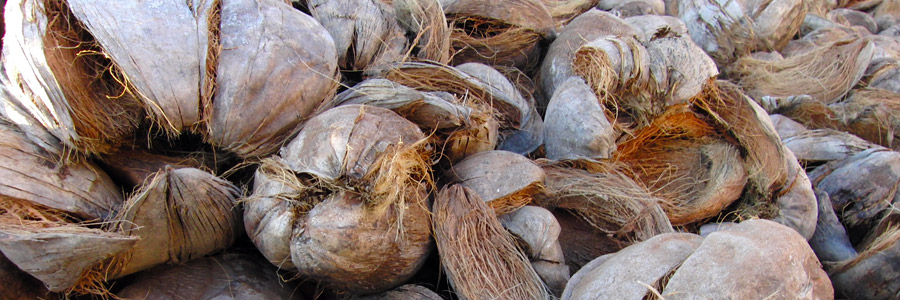
Coconut hulls: another commonly used medium, particularly among aroid growers. They retain a good amount of moisture on their own, but if not mixed with another substrate, they will need rehydration more frequently. Due to their coarse structure, they provide plant roots with a good surface area for anchoring and improved aeration. Like coco coir, they are an inert substrate, so nutrients would need to be added to support healthy plant growth.
Sphagnum moss: This comes from the same plant as sphagnum peat. While peat is the dead layer of material found beneath the living plant in bogs, sphagnum moss is the top layer (i.e., the living plant itself). When you find it in the store, it's usually already dried and sterilized. It's fluffy, so it encourages air circulation, and at least high-quality sphagnum comes in long tendrils packed into compressed blocks.
When submerged in water, it retains an incredible amount of water, and even when drained, it holds moisture for a longer period of time. Due to its slow growth rate, it is considered a limited resource. As much as possible, reuse sphagnum moss as long as it hasn't been previously used for an infected plant. Therefore, consider that this type of contaminated plant media can be boiled in a microwave to re-sterilize it.
For drainage and air circulation
Orchid bark is a coarse, often rough, potting medium that promotes proper drainage, allowing water and air to easily reach the plant's roots. It is regularly used for orchids and other epiphytes, but can also be used for other tropical plants that benefit from well-draining mixes. The bark can come from different types of trees, depending on your region or where a company sources its bark. Often, the bark comes from fir or other hardwood species.
Charcoal: This is also a useful type of plant substrate for improving drainage in any type of growing material. Remember that it contains inactive carbon and doesn't decompose like bark, making it good for keeping mixes and substrates loose and preventing them from compacting over time. Additionally, its moderate porosity helps retain water while also facilitating nutrient absorption.
Perlite: It's available in most stores and is often an ingredient in potting mixes for plants grown in containers. It's an organic material (volcanic glass) that is heated to a specific temperature, causing it to expand. The expanded material has small spaces inside that help it retain a good amount of water while also providing drainage. It doesn't provide nutrients, so it's generally not used on its own but rather as an amendment to other potting mixes.

Although perlite is a big part of the houseplant hobbyist's arsenal of supplies, I hate using it. It is very delicate and the stubborn perlite bits on my living room floor easily pulverize into powder when stepped on. Because it is so light, it tends to rise to the surface of the substrate over time. Less perlite evenly distributed throughout the pot and substrate leads to compaction (and less airflow) in the line.
Vermiculite: This is made of silicate material and also expands under heat. When placed in water, it expands like an accordion and retains more water than perlite. This type of plant substrate is useful if your plants need a consistently moist substrate that helps regulate water and nutrients. However, it's important to consider before purchasing this type of plant substrate that it doesn't offer as much drainage as other media.
Inorganic Substrates
LECA: sometimes called "hydroton" in hydroponic stores, and colloquially known as "coco puffs" due to its appearance. It's often found as smooth, puffy brown balls, though it can also be coarse-textured in gray or beige. It's made by using heat to expand clay. As an inert growing medium, LECA requires soluble nutrient additives for your plants to thrive.
However, its fine pockets allow for the absorption of water which the roots will absorb as needed. And due to its rough construction, it offers air circulation when used correctly. Since it is soilless, you can easily see the health of your plant's root system. The lack of organic material also discourages common pests, which is a benefit. As a side note, since passive hydro facilities using LECA are continuously wet, there is less guesswork when it comes to irrigation.
PON: This popular brand, known as "Lechuza-Pon," is another type of inorganic growing medium composed of various ingredients, including lava rock, pumice, and zeolite (which is made up of silicon and aluminum compounds, among other materials). Like the previous type, it doesn't use soil and relies on passive capillary action to retain and direct water to the plant roots as needed. However, it also requires a nutrient additive since it is an inert substrate. This substrate provides aeration, a regulated water supply, and ample drainage.
If you liked this article about the Different Substrates for Plants, we invite you to read other articles that contain topics of interest in the following links:
