
The Giant Panda, or Panda, is a mammal belonging to the order Carnivora. This has led to some controversy, but despite this, various DNA studies have determined that the panda belongs to the bear family, Ursidae, and is its closest relative, the spectacled bear. If you want to discover more about the characteristics of the Giant Panda , keep reading this article.

Characteristics of the Panda Bear
The panda bear has a body very similar to that of all bears. This lovable big bear has black fur on his ears and around his eyes, which makes him look like he's wearing glasses; as well as on his snout, arms and also on his shoulders, taking these parts out, the rest of his fur is completely white. Although scientists still do not know why these wonderful bears have these strange colors in their fur, many of them go so far as to speculate that this remarkable contrast in their fur provides them with totally effective camouflage in their habitat, which tends to be rocky. , gloomy or even snowy.
The fur of the panda bear is extremely dense, this provides it with a great amount of heat in the very cold forests that they usually inhabit. These same ones also have large molar teeth and in turn, also strong muscles in their jaw, these same ones help them to be able to chew bamboo well. Its legs contain five fingers and also a thumb. What we know as a thumb is actually called a modified sesamoid bone for them. This bone makes it easier for them to grab the bamboo while they eat it.
These bears have the second longest tail of the entire Ursidae family or the Bear family, since their tail can measure approximately 15 centimeters in length. The first place in this, is the Tibetan Bear. A very characteristic feature of them is their eyes, because their pupils are not circular like those of their other relatives, these would be elongated, similar to those of cats. It is very important to note that panda bears can comfortably live 20 years in total freedom and 30 years if they are in captivity.
How much do they weigh?
At the time of their birth, panda bears tend to weigh between 100 – 200 grams. Now, once they become adults, the males usually weigh up to 150 kilograms or so, on the other hand, the females usually weigh even up to 125 kilograms.
How much?
Panda cubs regularly measure between 15 – 17 centimeters in length. At the time of their adulthood these adorable bears are approximately 1,5 meters long. It should be noted that females are usually smaller than males, approximately 10% or 20% less than males.

Where does the Panda Bear live?
The panda bear regularly inhabits many mountain ranges throughout Central China, specifically in the province called Sichuan, although they also stand out for inhabiting other provinces such as Shaanxi and Gansu. The construction of many farms, deforestation, and other urban developments have made these beautiful bears completely abandon these lower areas where they previously lived.
It is important to note that panda bears are not easy to see in other parts of the planet, according to different studies and counts, it is insinuated that the number of panda bears left in the world is very limited and that, in addition, the number of pandas is not very high. number of copies remaining. A large population of these panda bears are not found in the wild, therefore, they are bred from 0 in captivity.
As mentioned before, these bears inhabit the mountain ranges of China, specifically the mountains of Minshan, Quinling, Quionglai, Daxiangling, Liangshan, and also Xiaoxiangling. All these mountains are at an approximate height of between 1,5 and 3,5 kilometers high.
In turn, a considerable population of these bears lives in different parts of Vietnam, although, thanks to human intervention, their population has declined significantly. Although it is evident that the panda currently lives in China and Tibet, fossil remains have been found in recent years, proving that the panda once lived in Burma, parts of Vietnam, and also in Eastern China.
It can be said that the ideal habitat for these bears must be made up of very stable climates that do not suffer any type of significant variations. All this stability in the climate prevents the bears from suffering strong changes in temperature that could harm them, and this same stability is easily found in the mountains with approximate altitudes between 1.300 and 3.500 kilometers.
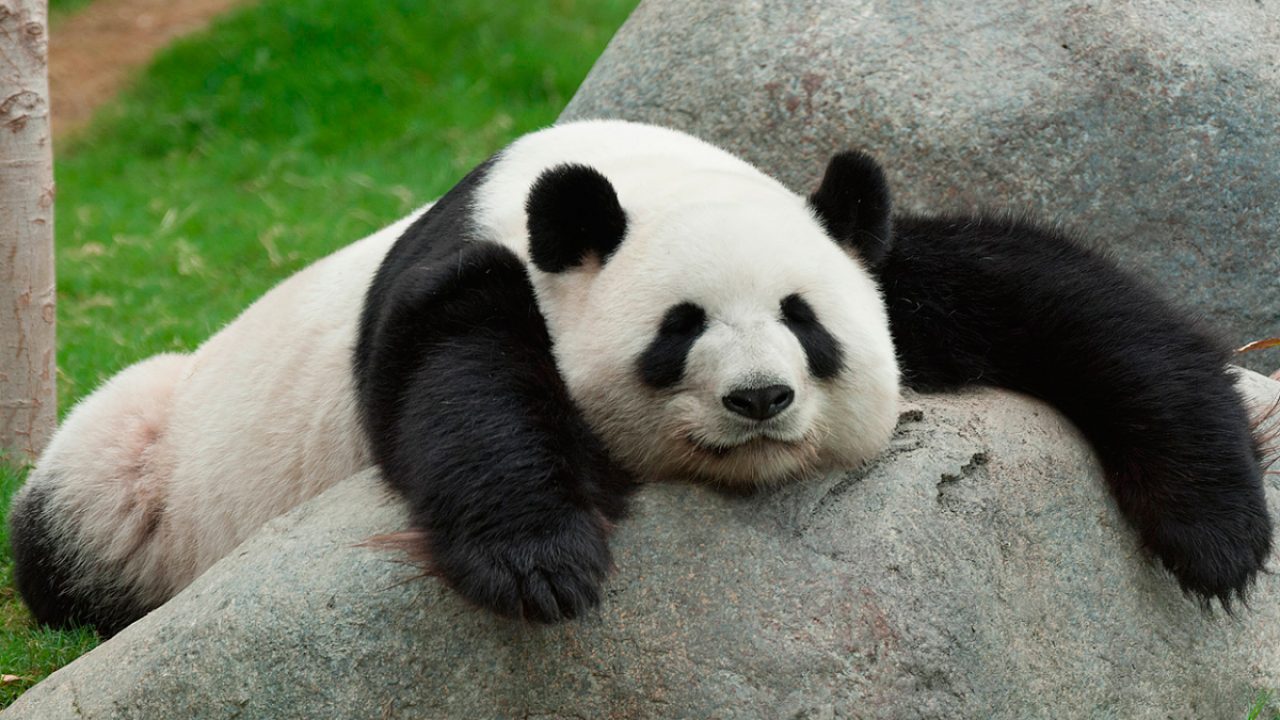
It is important to emphasize that this same type of climate is incredibly favorable for the growth of bamboo, which is the main food in the entire diet of pandas. Today, we can see that pandas live in habitats of approximately 9.000 square kilometers. These large spaces of land must have an ideal level of humidity, and also be very cool areas. This itself brings as a consequence that they are areas with many pines and different conifers.
Areas with dense forests are ideal habitats for pandas, as they always seek to climb tall trees to remain hidden. They typically inhabit eucalyptus forests, since this plant is one of the most important components of their diet. To learn more about their habitat, you can read about the panda's habitat.
It is important to remember that panda bears are very loose animals in their definition, this means that they will always seek to live as close as possible to a food source so as not to have to make great efforts to obtain it. Apart from this, predators do not usually live in these dense forests, this makes them feel extremely safe and do not take any action to protect themselves.
Food
Although taxonomically classified as carnivorous, these adorable bears have a diet that is primarily based on different herbs, with bamboo being their main food. Despite all this, the panda bear still possesses a digestive system and genes that denote that they are clearly carnivorous. For this reason, they get very little protein and little energy from bamboo. Its great ability to digest cellulose is entirely attributed to the microbes found in its gut. Most adult pandas can have a daily bamboo intake of 9 to 14 kilograms.
Because these bears have a very low-nutrient diet, it is always vital for them to keep their digestive tract completely full. The limited energy intake imposed by their diet has greatly influenced the behavior of these pandas. As a result, they tend to severely restrict any kind of social interaction and will always avoid steep slopes, thus preventing themselves from exhausting their energy. If you would like to learn more about their diet, you can consult the information on panda bear nutrition.
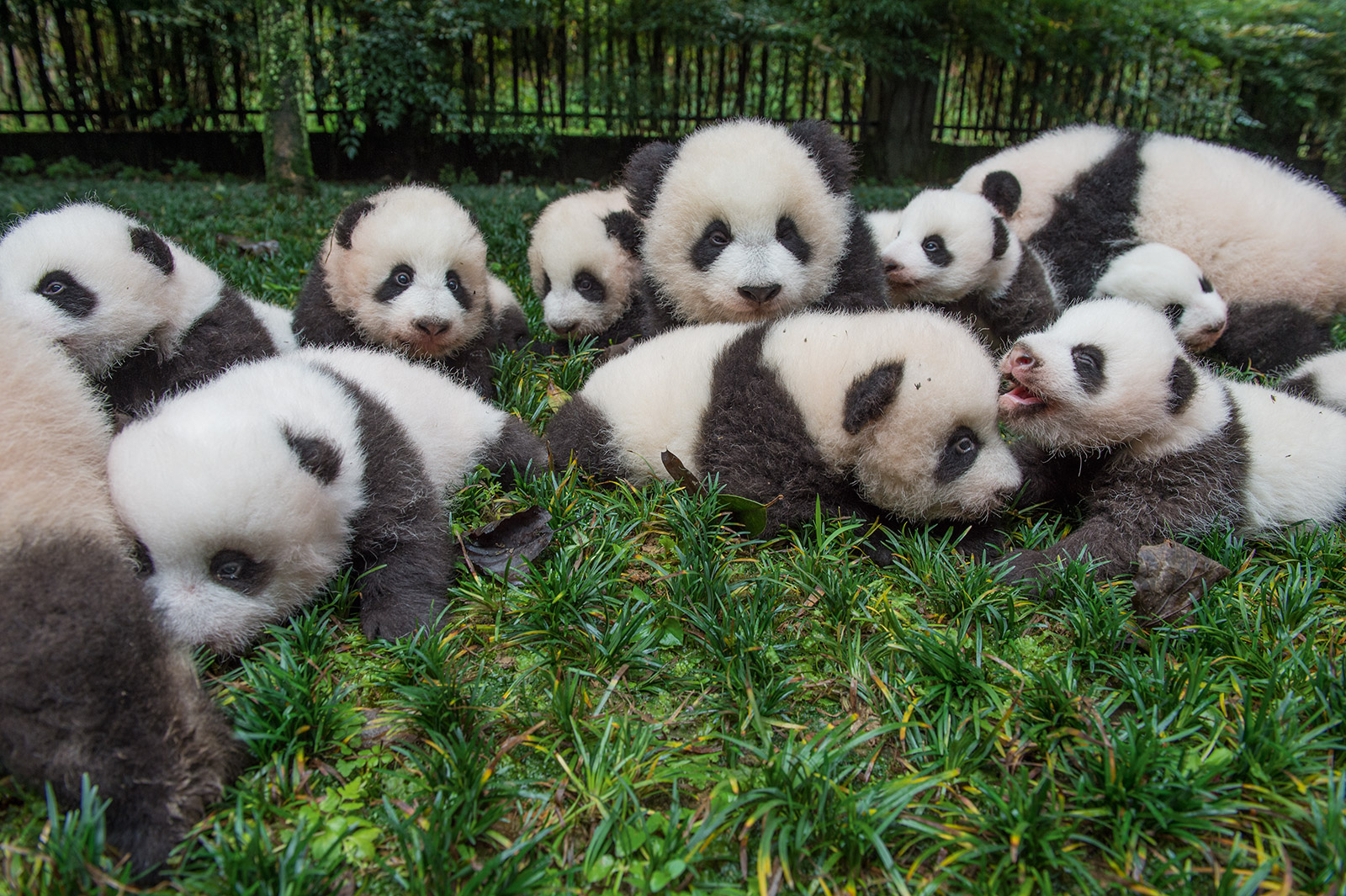
Two of the most remarkable characteristics of the panda bear, such as its round face and its enormous body, are given as a consequence of its diet centered on bamboo. These beautiful bears can eat any of the 25 different types of bamboo that can be found in the world. Some of these bamboo species are the Fargesia Dracocephala or the Fargesia Rufa. It is important to mention that in the areas where these bears live there is not a great variety of bamboo species, this is due to the great height of these mountain ranges.
Why is it in danger of extinction?
The panda bear is one of the many species of animals that today are in danger of extinction, which is why it requires protection. Over the last few years there have been many reports and studies that fully support this claim. A report which was made in 2007 showed that there are 236 panda bears which live in captivity within the entire Chinese territory, and in addition, there are another 27 pandas that are outside this country.
The wild panda population is highly variable; one study estimated that there may be around 1.590 living in complete freedom, while another report from 2006 suggests that genetic fingerprinting indicates a much higher number, potentially between 2.000 and 3.000. In September 2016, the panda was unfortunately declared a vulnerable species by the IUCN (International Union for Conservation of Nature). To learn more about this issue, we invite you to read about why the panda is endangered.
Evolution and Behavior
While pandas are in total freedom, they are usually quite calm animals, which spend all their days looking for food, specifically bamboo. They search around all the bamboo forests near the Qinling Mountains and throughout Sichuan province. Although they are usually very solitary animals, all adults have a fully marked territory, and also, females do not tolerate the presence of other females in their surroundings at all.
These beautiful bears communicate through different noises such as scratching various trees or leaving urine marks. These pandas can climb all the trees, in these same trees they can make a comfortable shelter, or they even tend to make shelter in rock crevices, although they never make burrows in which they last a long time. For this reason, pandas are animals that do not hibernate, unlike many other mammals, instead of doing this, pandas move to altitudes that are much warmer.

Throughout the short mating stage, pandas engage in social encounters, encounters in which females and nearby males mate. After the reproductive act, the males leave the female so that she can raise the offspring, which is a puppy, throughout the mountain range.
Reproduction
Firstly, the most common method of breeding pandas in captivity was by applying artificial insemination; This is because most pandas, after being captured, project a resounding rejection of mating. For this reason, scientists resorted to applying very extreme and even incredible methods such as giving Viagra to all males, or even showing them videos of pandas mating.
Only in the last few years have these panda breeding programs started to become successful. Various studies have shown that this bear species has a very comparable mating pattern with various populations of the American black bear, which is a growing family of bears. Today the average annual reproduction of these bears is approximately one cub every two years.
These adorable animals reach their full sexual maturity between four and eight years of age, and from then on they will be able to reproduce until they are 20 years old. The reproductive stage is between March and May, when the females enter this cycle they only last between two or three days, it is important to mention that the females enter this cycle only once a year.
At the time of mating, the females are crouched with their heads down, the male goes on to get on top of the female from behind, this action is repeated several times to ensure that reproduction has been completely successful. The entire gestation period of the future puppy tends to last between 95 to 160 days, although the average is usually 120 days. These little newborn bears usually only weigh between 90 and 130 grams, this represents less than 1/800 of the total weight of their own mother.
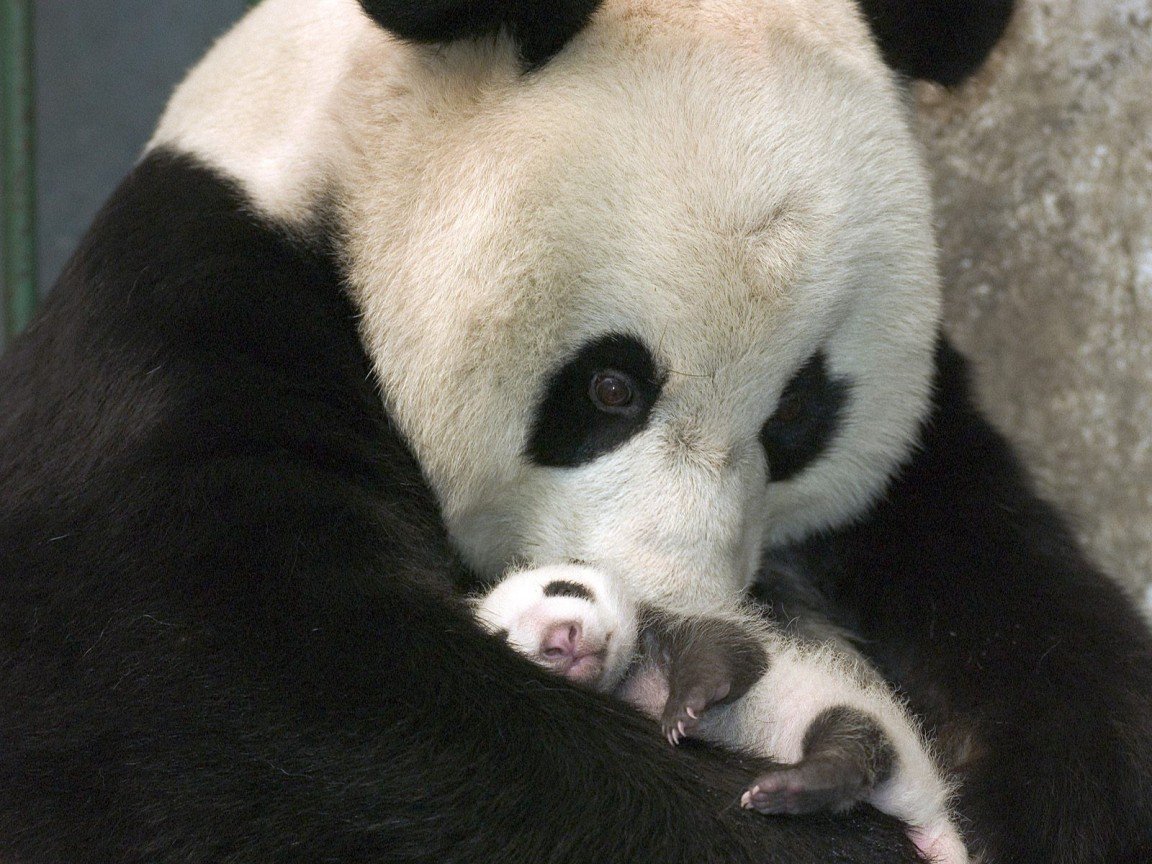
baby panda
At birth, panda bears are pink in color, have no teeth, and are completely blind. Panda cubs are extremely small, which makes it a very complicated task for the mother to take care of them correctly. These cubs feed from their mother between six to fourteen times a day, an action which lasts approximately 30 minutes each time. Then, for about three or four hours, the mother must leave the burrow so she can feed on it, leaving her baby completely defenseless.
Approximately one or two weeks after the bear's birth, its skin begins to turn gray, a gray that will later become the black color characteristic of this species. A fairly light pink color will be evident in its fur, this is due to a chemical reaction that occurs between the puppy's fur and its mother's saliva. After a full month, the development of all its fur is finished. This same will begin to become much softer and much denser with the passing of your years of life.
After spending between 70 and 80 days, the cub panda begins to crawl. After six months they will be able to start consuming very small amounts of bamboo, although breast milk will remain their main food throughout their first year of life. During their entire development in the first year they can weigh an incredible amount of 45 kilograms, in addition, these babies live with their mothers until they are 18 months old or 2 years old. Pandas in the wild usually have a birth interval of about two years.
Types of Panda Bears
Perhaps due to its distinctive color, or the marked differences in its habits compared to all its relatives, the giant panda, or panda bear, was for a very long time included in the family of procyonids. This led to the belief that they were very large relatives of raccoons. The red panda was also once included in this family, even though it is now well known that it has absolutely nothing to do with raccoons or pandas, but is a unique species within its genus, called Ailurus.
In today's times, many studies and genetic tests fully prove that the panda bear or giant bear belongs to the bear family and aptly named Ursidae. Fossil records clearly show how pandas came to inhabit many other parts of the world, even in different environments, apart from this, a study of the genome yielded another fascinating curiosity; that this species of bears came to live a bottleneck more than 40.000 years ago in the past. Due to different unknown factors such as new predators, climatic situations, etc., they became extinct, leaving only a few survivors, these same ones would be the ancestors of all current giant bears.
If you want to know more about other animals in the world, do not hesitate to continue reading these articles:
Mammals
Characteristics of Wild Animals
