
Knowing the meaning of Ecological Community leads to greater awareness of the importance of conserving and protecting the environment, in view of the positive impact that this action brings to all species. In addition to knowing its meaning, it is vital to understand its characteristics in order to better understand its functions within nature and its importance for human beings and to improve our place within the ecological community.

The Ecological Community
The definition of Ecological Community refers to the set of living beings from different kingdoms (animal and plant) and species that inhabit the same place for a period of time. The Ecological Community is also called "biocenosis", "biotic community" or "biological community". The Ecological Community has to be studied as a unit or group and not independently of each species of living beings that it forms and that interact. In view of its study as a unit is how the Ecological Community has more value.
Features
The distinctive feature of the Ecological Community is that it allows studying the relationships between different species in the same specific space and time. Where its distribution, organization, quantity, demography and reciprocity between the different populations that cohabit are included. Likewise, the main perspective of Community Ecology is found in the interrelationships between populations depending on the determined genotypic and phenotypic characteristics.
In addition to studying the interactions of species with biotic factors, Community Ecology also studies the interrelationships of species and abiotic factors, by how they are affected by changes in temperature, rainfall or soil pH, among others. These factors are important because they act as a selection filter for species that make life in the community. An example of this is the characteristics of the plants that grow in the deserts with respect to the characteristics of the plants that live in the tropical humidity forest, both vegetations are conditioned by the average annual precipitation.
The study of the concept and scope of the Ecological Community comes from the plant sociology proposed by the Europeans. The modern concept of Ecological Community analyzes schemes such as the variation in the diversity of species, balance, productivity and organization of the food chain and, likewise, studies processes such as the dynamics or the succession of the predator-prey population.
Importance
In areas such as botanical taxonomy, the individual is studied as a single system with the aim of distinguishing the characteristics that differentiate them from others and make them different from other species. On the other hand, the Ecological Community the main factor to study are the different relationships that are established between individuals of the same species and different species of their biotope. Understanding by biotope the place with environmental conditions required for the growth and development of some species of animals and plants.

Understanding the concept of Ecological Community allows us to assess the importance of the relationship between individuals of the same community that cohabit and survive together, allowing them to live and develop in the biotope in which they are found. The different inter-specific relationships of the biotic and abiotic elements in the same place.
As they occur at different levels from the food chain, to the different relations or associations of symbiosis that occur between some species of plants and fungi, as well as the symbiotic association between some carnivores that control the population density of some herbivorous animals that would decrease life vegetable.
The word that best describes the importance or value of an Ecological Community is “balance”. Describing “ecological balance” as the state in which even though population dynamism and movement occur, the community as a whole maintains its structure. This is what happens in an Ecological Community.
These are spaces with many relationships and biological associations affected by the environmental conditions that are kept in balance with each other and with the environment that serves as support for the life and survival of all organizations, in this way to avoid non-prospering forms destructive and invasive. All these relationships that are kept in balance, help to achieve sustainable development, which guarantee biological diversity and the success of the coexistence of all species within the Ecological Community.
Conservation of Ecological Communities
The species that poses the greatest threat to Ecological Communities is the human being. This occurs because the different activities carried out to establish themselves in a place alter the ecological balance of the Ecological Communities. To achieve a significant change that results in a balanced relationship in the management of the natural resources of the Ecological Communities, there must be a change of attitude, in order to reduce the negative environmental impact of human beings on the different Ecological Communities.

Prevent overexploitation
Human beings have to seek to achieve a change in attitude regarding the use of environmental resources, with the aim of reducing the impact on Ecological Communities above the level that ecosystems can withstand. Planning and designing projects that evaluate the quality of the environment and to what extent they can be intervened affecting as little as possible.
decrease overcrowding
The alteration of the ecological balance that the Ecological Communities have, can result in the overpopulation of some species, occurring that they can become animal or plant pest species. It should be noted that the natural resources in all ecosystems are limited and an alteration of the food chain can lead to an overpopulation of species, because the population of its natural enemy was altered and it is not present in that community until it reaches its normal range again. balanced population. This is the cause of the presence of plague in agricultural crops. It is suggested to promote organic farming.
Control the introduction of invasive species
The ecological balance achieved by the Ecological Communities has been achieved by the evolution of living organisms for millions of years that began to appear on the planet. Human beings, as they discovered new lands, as well as new animal and plant species, have sought to cultivate plant species and also breed animal species outside their place of origin, with the environmental conditions being favorable and there being no enemy. natural that controls it and these new species, become invasive species in the new place where it was taken.
Promote good management of protected areas
Human beings are aware of the importance of protecting the Ecological Communities on the planet and one way to achieve a balance between the development of artificial ecosystems where human populations are established and the protection of natural ecosystems is through the establishment of Areas Protected, such as National Parks and Biosphere Reserves, among others, have been created or established since the XNUMXth century.
With the establishment of these Protected Areas, the aim is to protect Ecological Communities that thrive in certain natural spaces, which, due to their biological, cultural, scenic, anthropic or other importance for environmental balance, must be protected. Depending on the different categories of environmental protection, they can be places isolated from human activities because they are very fragile ecological niches. In addition, to protect Ecological Communities, human beings must be educated in learning to interact with natural environments and achieve good sustainable development over time.
Ecological Niche
The niche of each species indicates how it is associated and interrelated with the surrounding environment and the place it occupies in the community. In Ecological Communities, each species dominates a niche. The different species that inhabit a community can achieve a balance, because the species can have different niches, which is why they can interact or coexist.
Different species occupy their own niches, this division of the niche is what maintains the balance between species and reduces competition between species. Because of this, it is because species can inhabit together, since it controls its own growth more than it controls the growth of other species. This indicates that the competition between the same species is greater than the competition between the other species. That is, intraspecific competition is always greater than interspecific competition.
According to the number of species that cohabit in an Ecological Community will be the number of niches present. In the event that two species that have the same niche (such as the same type of food) cohabit, one will outcompete the other species. As the different species occupy more niches, they will indicate that a greater biological diversity occurs in the Ecological Community.
Ecological Community Theories
According to studies by ecologists there are different theories to explain the behavior of Ecological Communities, these are the holistic, individualistic and neutral theory. These theories are described below.
holistic theory
According to holistic theologians, the Ecological Community is determined by the different species that make it up and their interactions. The interdependent associations of species play an important place in the functions of the community. This is why the Ecological Communities are repeatable and easily balanced, with the abiotic phenomena that determine it at all times.
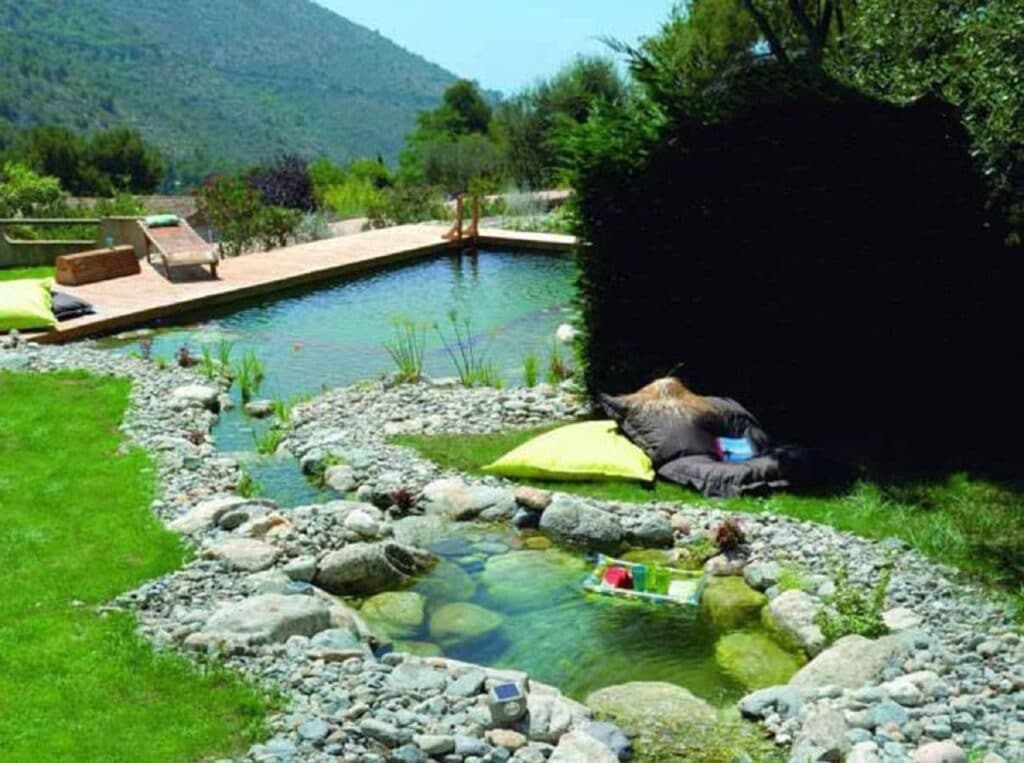
The holistic theory was described by Clements, considers the Ecological Community a restrained unit with established limits. The holistic theory was proposed after observing that several species of plants frequently cohabited in the same habitat, due to this observation is that he concluded about the interdependence between them. Likewise, he pointed out that Ecological Communities do not form randomly but rather it is an evolutionary response.
individualistic theory
The individualistic theory of the Ecological Community was described by Gleason. According to this theory, the population increase of a species changes gradually as it passes through different complex environmental gradients. Likewise, the changes of each species occur independently of the changes that occur in other species that inhabit the different levels of the Ecological Community. For the individualist theory, the interrelation between species is random and occurs by coincidence. The composition of the Ecological Community is determined by the variable environmental factors found in the different gradients of that system.
neutral theory
According to the neutral theory described by Hubell, in the Ecological Community the species that live in it function in an equivalent way and the greater or lesser population of a certain species varies by the processes of births and deaths that occur randomly. The consonance of the species of an Ecological Community results in ecological drift. This ecological loss leads to species populations oscillating randomly, while the total number of individuals in the Ecological Community remains constant.
When the death of an individual occurs within an ecological community, it is likely that each of the species will conquer that parcel. Stochastic transformations can lead to species in that community becoming extinct, however this can happen in a distant time if there are many individuals of that species.
interrelationships between species
In the Ecological Communities the species interrelate with each other in an interspecific and intraspecific way, here the different ways that the species interact are explained. Through competition, predation, parasitism, mutualism, commensalism, and other forms of interspecific or interspecies interactions. Depending on their community structure, the ecological community is organized in relation to the type of interaction.

Competition
Different species enter into competition with each other when resources are finite. Ecologists in this regard believe that population density, biomass or body size, and the diversity of species are limited by interspecific competition. There are different opinions about the types of competencies, which are currently topics of discussion.
In nature, competition between the same individuals, populations and species has been observed in the relationships between species, however, studies carried out by ecologists still show whether competition has led to the evolution of large groups. Different competitions are distinguished, such as: Interference competition, apparent competition and exploitation competition.
- Interference competition. It is the type of direct competition between individuals of different species. This occurs for food or territorial competition. Examples of interference competition occur when a plant (conifers) produces allelopathic chemicals to prevent competing species from growing near them. Also when a lion runs after a hyena in a kill.
- apparent competition. This type of apparent competition occurs when two different species have the same predator. Populations of these species can decline by devastation without direct exploitative competition.
- Exploitative competition: Exploitative competition occurs when there is competition for the same resource. In other words, this occurs when an individual of one species consumes a resource such as food, shelter, energy or another, and then an individual of another species can no longer dispose of that resource. Apparently this type of exploitative competition is more frequent in the Ecological Communities, but it has to be distinguished well from the apparent competition. There are variants in the operating powers:
Completely symmetric: Occurs when all specimens get the same amount of resources, regardless of their size.
Symmetrical perfect size: Occurs when all specimens use the same amount of resources per unit of biomass.
Asymmetric absolute size: It is the competition that originates when larger specimens exploit or use all available resources. The level of size asymmetry directly influences the structure and variety of the Ecological Communities.
predation
Predation or rapine is the hunting of another species to eat it. It is an inversely proportional relationship because the predatory species wins or benefits and instead the prey species or that is predated is harmed because they eat it. Many examples are seen in nature, such as falcons that catch a rodent and kill their prey before consuming it.
On the other hand, other types of predators are parasitic, they eat their prey even when they are alive. An example of this type of predator are vampires, which feed on a cow. It should be noted that over time parasitism can cause the death of the prey individual. Another example of predation is the consumption of plants by herbivorous animals, during the grazing of sheep, cows, goats or other herbivores. This predation influences the number of predators and prey species and also the number of species that are related in an Ecological Community.
Mutualism
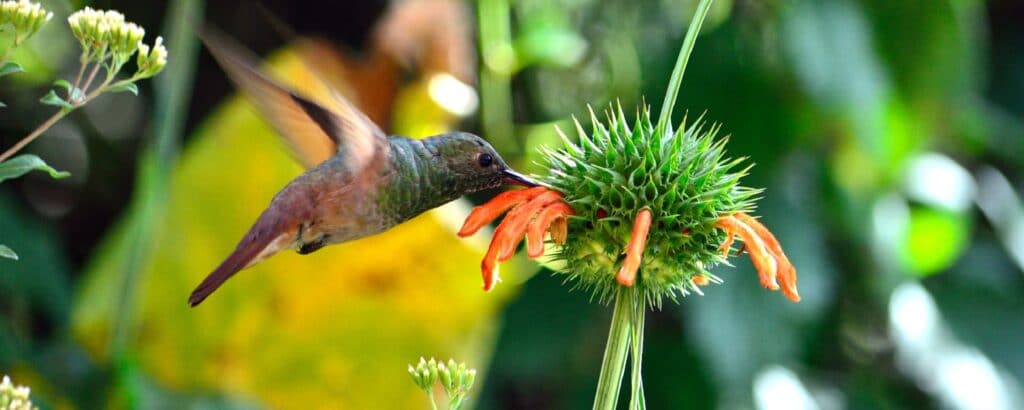
In mutualistic relationships between species, both benefit, as exemplified by the association of Rhizobium bacteria , which live in the root nodules of some leguminous plants and provide them with nutrients. Other examples include pollination by insects and birds of various plants; the plants offer nectar, and the animals carry their pollen to other flowers, pollinating them.
Commensalism Relationship
Unlike Mutualism, in Commensalism the relationship between individuals, one individual comes to benefit and the other individual neither benefits nor is harmed. The individual who benefited is called "commensal" and the other individual who is neither benefited nor harmed, is called "guest". This type of association between species occurs when epiphytic orchids live on the branches of trees in order to obtain sunlight and rainwater, without affecting the trees or benefiting them.
The antagonist of Commensalism is Amensalism, which is a relationship between species in which one organism negatively affects another organism and yet the original organism is not affected.
Parasitism
It is the association between species in which the organism or individual of a species is harmed and while the individual or organism that parasite benefits.
I invite you to continue knowing the wonderful nature and protect it, read the following posts:
- Activities for the care of the Environment
- Examples of Corporate Social Responsibility
- Hazardous Waste Classification