
When we talk about constellations and galaxies, we are referring to two fundamental elements of the beginning of the universe.
constellations and galaxies
First and foremost, it is essential to explain the meaning of constellations and galaxies to gain a better understanding of these two parts of the cosmos . Let's see:
Constellations
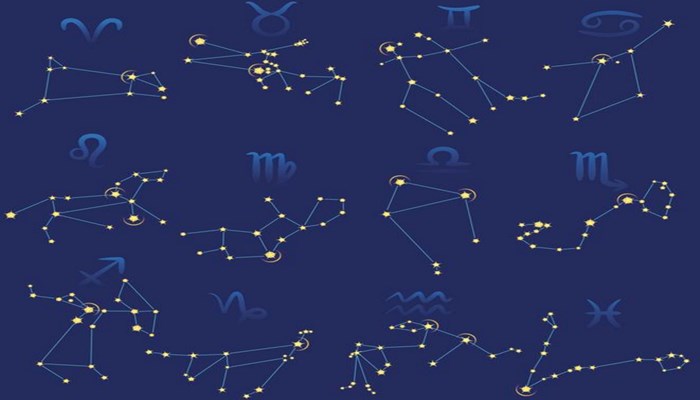
A constellation is defined as a group of stars, and its position in the sky is universally fixed. Throughout history, the places that observed constellations have given them names based on the subtle lines that connect the stars in the group.
The stars in the field of constellations
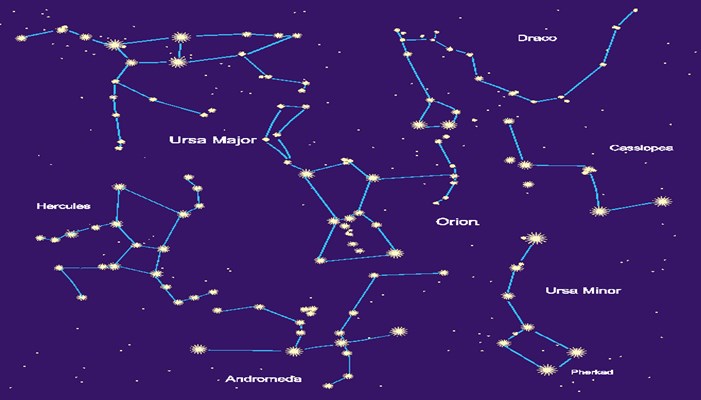
The stars can be found even very far apart and are unequal , that is, unfair according to the knowledge and location that equates them. The first populations to discover them were from the Middle East and subsequently from the Mediterranean. There are other kinds of constellations with different names; among the 88 public ones are also those of the zodiac, and five kinds of these: the circumpolar ones, which were visible in the northern hemisphere throughout the year.
Spring constellations, such as those formed by Crater, Leo, and Hydra; summer constellations; and autumn constellations, which allow us to distinguish galaxies far beyond our Milky Way, such as Andromeda, Aquarius, and Pegasus . Winter constellations can also be mentioned.
constellation division
Constellations are divided according to their boundaries, hence the northern and southern constellations, the latter located in the southern hemisphere. It is known that the first constellations were discovered in Mesopotamia , almost 4000 years before Christ, and some of them bore the names of animals, such as Leo, Taurus, and Scorpio.
It is almost certain that the function of these constellations in prehistory was to calculate time and guide sailors or merchants during their journeys across seas or overland. Thus, the constellations gradually acquired names and stories associated with their names.
The constellations and their history
The Greeks referred to Orion , which the Egyptians had already explored as Sahu . The Zodiac, on the other hand, was established by the Babylonians in the 6th century BC and later adopted by the Greeks. The first inventory of constellations dates from the 2nd century BC, the work of Ptolemy, who in his "Almagest" grouped 1.022 stars into 48 constellations. Ptolemy's information was partly compiled in Alexandria.
Similarly, the Chinese constellations are significant and among the oldest in the world . They are defined as autonomous groups, since Chinese observers divided the sky into thirty-one regions, within which there were 328 abodes. These regions are limited to the northern hemisphere and can be distinguished at high altitudes, while the abodes would be the European constellations that occupy the zodiacal region.
The purples differ from the western constellations because they are not linked to the movement of the Sun, but to that of the Moon in its periodic path near the Earth.
Designes of the most famous constellations
Now we will distinguish how the most frequently observed constellations are named. The myth of the zodiac stems from a zone of the sky divided into twelve equal parts , like the months of the year, and the zodiac constellations are: Aries, Taurus , Gemini, Cancer, Leo, Virgo, Libra, Scorpius, Sagittarius, Capricornus, Aquarius, and Pisces. These are the names of the most famous constellations.
However, Ptolemy added 36 more constellations to these , including: Andromeda, Hercules, Ursa Major and Ursa Minor, Argo, Canis Major, Centaurus, Cassiopeia, Crater, Eridanus, Canis Minor, Hydra, Orion, Pegasus, and Perseus. These and other constellations were mentioned in Ptolemy's most significant work, which was mentioned earlier.
The Arabs attempted to expand the constellations by connecting stars that were not visible from Alexandria. In the 16th century, when European sailors ventured across the oceans , they realized that many areas lacked names and therefore set about creating new ones.
The galaxies
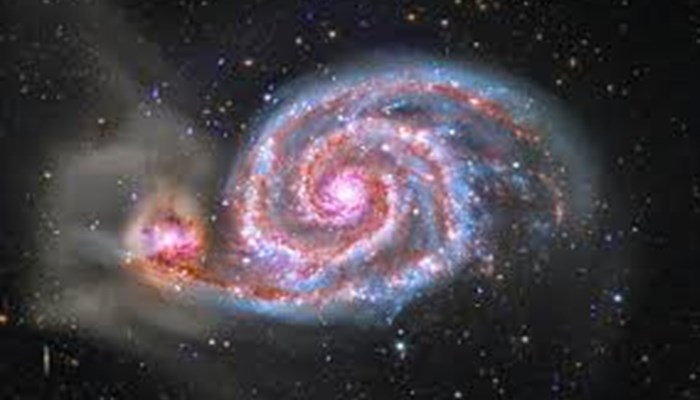
A galaxy is an aggregate of vapors, particles, and stars and their solar systems . The galaxy is held together by the force of gravity . The Milky Way, our galaxy, likewise has a galactic center.
When we see stars in the night sky, we are observing other stars in the Milky Way . If it is very dark, away from city lights and houses, we can even notice how fragments of dust from the Milky Way are scattered across the sky.
galaxy shapes
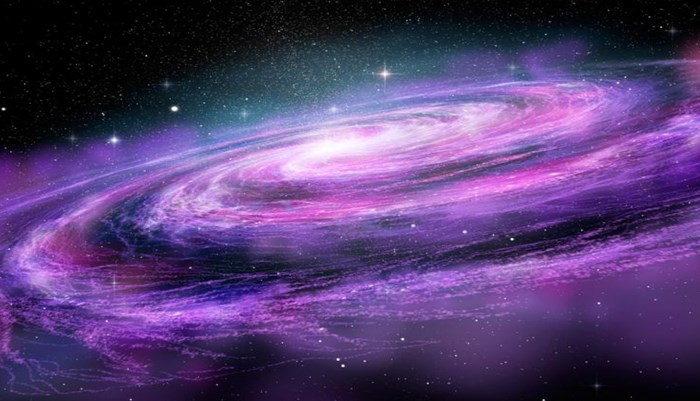
Some galaxies, like our own, have a spiral shape. They have curved arms that give them a pinwheel appearance. Other galaxies are flat and oval-shaped. These are called elliptical galaxies. Similarly, there are nebulae that are neither spiral nor oval. They have an irregular shape and resemble smudges. The light we perceive from each of these nebulae originates from stars within their interior.
Sometimes galaxies get very close and collide. According to various news sources, the Milky Way will one day collide with Andromeda , our nearest galactic neighbor. But don't worry. That's about five billion years away. And even if it happened tomorrow, you might not even notice, since galaxies are so massive and spread out so much that, even if they collide, stars and solar systems often don't actually make contact.
Differences between constellations and galaxies
A galaxy or nebula is a large, contiguous region composed of countless stars, space dust , vapors, and atoms. A constellation, on the other hand, refers to a group of stars that, through imaginary lines drawn on the celestial surface, create a shape reminiscent of a specific figure, such as an animal, a mythological character, or something else entirely. In other words, a nebula is located within a constellation.
Conclusions about constellations and galaxies
A galaxy is an aggregate of different stars , vapor clouds, stars, space dust, dark component, and perhaps black energy, gravitationally bound together.
Types of galaxies
Galaxies can be classified as follows :
1. Elliptical galaxies
They look just like a light bulb without a reflector, with supposedly similar clarity. They are free of fog and dust and are made up of old , golden stars with a low metallic content.
2. Spiral galaxies
They exhibit an axle or stem made from a disc with a large amount of vapor and astral dust.
3. Lenticular galaxies
They resemble a core with a wheel, but without spiral limbs. They are composed of old stars and lack vapor or space dust.
4. Irregular galaxies
These are galaxies that do not show any kind of proportion ; no focus or ring appears to be defined.
Constellation
A constellation is an agreed-upon gathering of stars whose perspective in the night sky is supposedly close.
How to notice the constellations?
First, it's important to know that constellations and galaxies are not the same thing. To identify constellations, you need to be able to see the stars that make up their shapes. People in cities can't distinguish them because of light pollution, which affects the clarity of the stars. You need to find a dark area.

In conclusion, we can say that a universe full of constellations and galaxies is a testament to the beauty and complexity of the cosmos that surrounds us.
