

Also known as the Irish High Cross, the Celtic Cross is one of the most recognizable pagan symbols worldwide. Many people know what it looks like but are unaware of its origin or what it represents. This symbol can be found on bracelets, pendants, earrings, rings, fabrics, tattoos, and more. Yet, many still don't know the meaning of the Celtic Cross.
To clear up any doubts, this article will explain what this symbol is and what it represents. These beautiful and large monuments, which can reach up to seven meters in height, adorn the green landscapes of Ireland. So, if you're interested in the topic, I recommend you keep reading.
What is the Celtic cross?

Before discussing the meaning of the Celtic cross, let's first explain what this symbol is and what it was used for. It is one of the most revered Irish symbols in that country. Few symbols are as famous as those associated with the embodiment of Christianity in Ireland. The Celtic cross is essentially a cross with a circle or halo passing through it. This circle or halo supposedly represents light. Furthermore, Celtic crosses are often decorated with Celtic knots or traditional Gaelic symbols.
Another name for this symbol is the Irish cross. Today, it's a very famous Christian symbol that originated in paganism. During the Middle Ages, the cross with a circle of light appeared in Great Britain and France. Many believe it's a symbol that predates Christianity, existing when the first petroglyphs appeared. Later, between the 9th and 13th centuries, this type of cross was adopted by Irish missionaries.
The reason why such large stone monuments began to be erected remains a mystery to this day. What is undeniable, however, is that Celtic crosses are often located near important monasteries. Therefore, experts speculate that they may have been used to define special areas within monasteries or to delineate their boundaries. They could also have served for prayer, preaching, penance, or teaching the Scriptures. As for the more elaborately carved Celtic crosses, these likely reflected the authority and wealth of the monastery in question. Obviously, they were also used to commemorate important and prominent individuals.
Legend
As one might expect, there are legends and myths surrounding the origin and meaning of the Celtic cross. According to Irish folklore, it was Saint Patrick who introduced this symbol when he was trying to educate and, presumably, convert the Irish who followed the pagan faith. It's worth noting that the Celts worshipped a deity called Lugh, Lug, or Luga, who was one of their principal gods, especially in Ireland. He represented light and the sun. According to legend, Saint Patrick had the idea of combining the Christian cross with a circle representing the sun. In this way, the cross was given its own identity, associating it with a halo of light and the Christian symbol.
There is another myth, though less popular. This one suggests that placing the cross over the sun symbol demonstrated that Christ was more powerful than the deity worshipped by the pagans.
What does the Celtic cross mean?
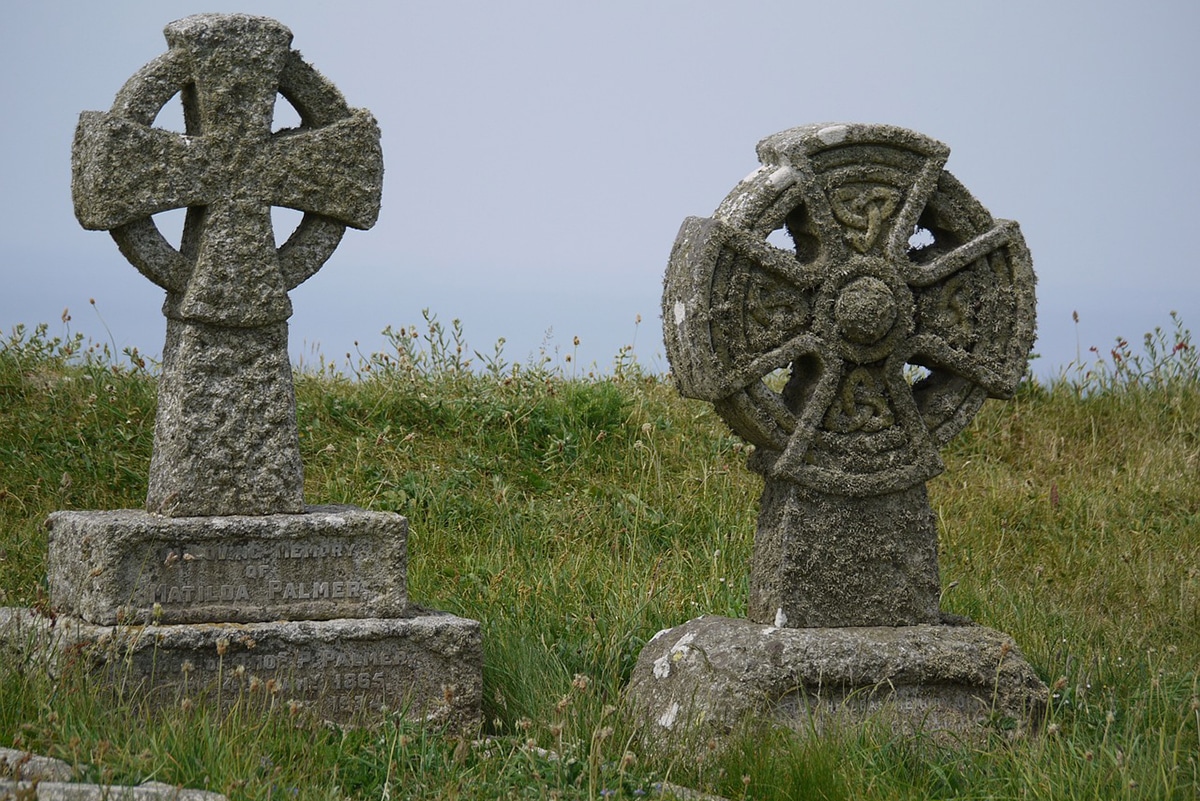
Now that we know what this ancient symbol is, let's look at the meaning of the Celtic cross. It has essentially become a very traditional Christian symbol worldwide, used for religious purposes by the faithful living in Ireland. It is a symbol of both faith and Irish pride. Today, many people around the world use the Celtic cross, its meaning representing admiration for the Christian faith and Irish culture. Furthermore, the meaning of the Celtic cross is related to the symbolism of Irish religion and history, which can be explored further in this article on the differences between Celtic symbols.
It should be noted that the oldest surviving Celtic stone crosses in Ireland today were created between the 9th and 13th centuries. These monuments are often carved with intricate shapes and images. The earliest Celtic crosses depict knotwork, while later ones include various biblical inscriptions and storytelling images.
Distinctive features
Within the Irish landscape, these Celtic stone crosses are truly imposing and impressive. The earliest ones stand around three meters tall, and later ones are considerably taller. However, this variation is not their only distinctive feature. The four points of the ancient Celtic crosses bear various representations of pagan festivals:
- Imbolc: It is celebrated in February. It is associated with the fertility of the earth and is prayed for successfully completing new projects.
- Beltane: It takes place in May. It is the representation of the virility of the gods and the fertility of cattle was requested.
- Lughnasadh: It is celebrated in August. It is related to the harvest time and the harvest and the flocks are blessed.
- Samhain: Party of the month of November. It is the last pagan festival and the last harvest of the year. Therefore, it represents the end of the cycle of the Celtic wheel.
Besides representing pagan festivals, the points of ancient Celtic crosses are also associated with the cardinal points related to pagan deities :
- Lugh: To the East. He is bound to light and is a protective warrior
- Nuada: To the south. He is linked to fire and is the defender of emotions.
- Dagda: To West. It is linked to water and is the controller of thought and mind.
- Lia Fail: To the north. It is tied to the earth. There, only legitimate kings are approved by the druid deities and crowned.
As you can see, the meaning of the Celtic cross has a connotation closely related to religion, which over time even became a symbol of the Christian faith, leaving pagan representations aside, of course.