
Mythology offers us incredible stories for human enjoyment. It features narratives with amazing heroes and happy endings. There is also room for tragic stories that end with the destruction of a people and the death of its protagonists. We invite you to read this story of Cassandra , the Trojan princess with a terrible curse.
Who is Cassandra?
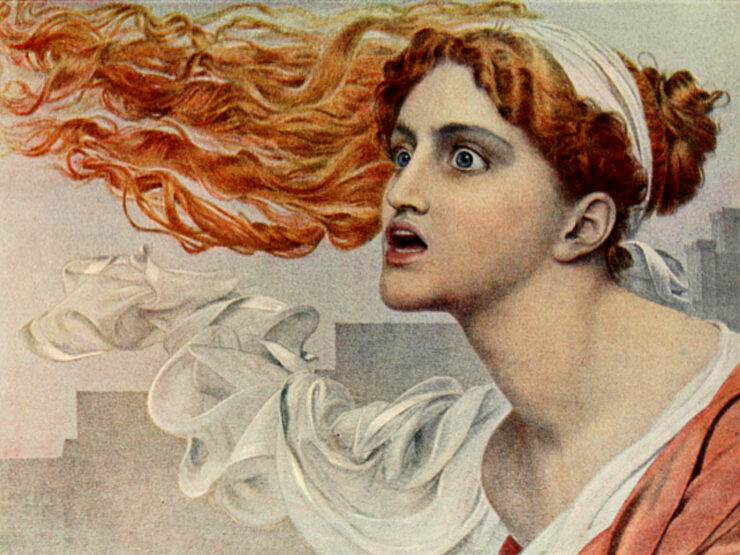
Within Greek mythology, the character Casandra is the daughter of the kings of Troy called Hecuba and Priam. Cassandra was a princess and quite an enigmatic character, due to the terrible curse that she had to carry from her for the rest of her life. In addition to fulfilling her royal duties, she Cassandra was a priestess of Apollo (who was the god of light and the sun).
The position of priestess, that is, she was involved in the practices of this cult, being a faithful believer. Apollo was in love with her, despite being a mortal. So when she asked him for the gift of prophecy, he gave it to her in exchange for sharing her love.
Cassandra was indifferent to the attentions of the god. Once she had the gift of hers, she completely rejected it, causing Apollo's wrath to be unleashed. The god decided to curse her, making her a source of constant suffering, since she could keep her power, but no one would believe in her. Little by little, Apollo hoped that she would go crazy.
You can read more content like this on our blog; in fact, we recommend reading the myth of Persephone.
Cassandra Myth
The Cassandra myth goes far beyond the simple curse of Apollo. That gift only brought pain and suffering in her life since she was forced to see the future without being able to intervene in it. In this article we will talk about the Greek myth of Cassandra and the terrible consequences of her curse.
The story tells how Apollo was terribly in love with Cassandra, a priestess of his cult but she rejected that love. So angry and vindictive, he decided to curse her by granting her a gift that could only end in suffering.
This myth has crossed the borders of language and time, it is a universal icon of supreme importance. In fact, the feminist movement has its origin in this story.
versions of the myth
There are several versions of these events, some explain how Apollo spits in Cassandra's mouth to curse her. While others talk about the fact that Apollo takes away the gift that he himself had given him.
On the other hand, the best known Greek version says that Cassandra is the one who asks Apollo for this gift and that she promises to be his consort if he fulfills it, Apollo accepts but Cassandra does not continue with the deal and rejects Apollo, which unleashes her go to.
While it's true that many people would like to have Cassandra's gift, the reality is much harsher. Cassandra was condemned to watch all the tragedies that would occur around her (the destruction of Troy, the death of Agamemnon, and her own destiny) without intervening to change their future.

Apollo's curse transformed a gift that could have been used for good into one that was completely useless. Cassandra had countless visions throughout her life, and every time she tried to recount them, her family thought she was mad. In some versions of the myth, they mention the possibility of imprisonment to keep Cassandra away from public view.
The death of Agamemnon
Another of the stories that revolves around the curse of Cassandra, is how she had a vision that revealed the death of King Agamemnon and her own death if they both returned to Greece. This story, like many others, ends in disgrace when the King does not believe Cassandra and decides to return to his homeland.
Upon entering Mycenae, Cassandra and Agamemnon were murdered by Clytemenestra, the king's wife, thus sealing a cruel fate for that princess.
If you'd like to read more articles like this, we invite you to explore our blog. Additionally, we recommend reading Perseus in the myths and legends category.
modern adaptations
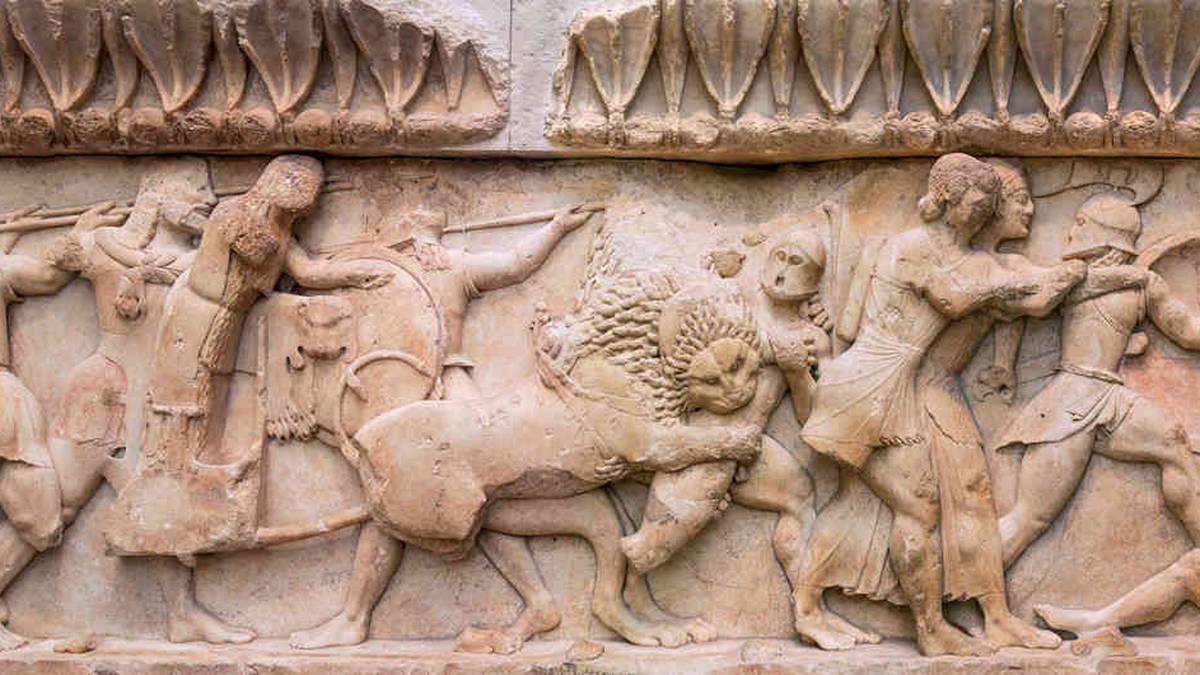
Obviously, like many other characters in Greek mythology, through the years, Cassandra has been represented in various artistic works, from literature to cinema. She has been adapted to fit in various times.
literary references
The earliest recorded adaptation of Cassandra is her appearance in the fifth book of Geoffrey Chaucer , entitled Troilus and Cressida , written in 1385. There, this Trojan princess is portrayed as the sister of Troilus.
This narration makes a clear reference to Cassandra's curse, since it speaks of Troilus having a dream where he sees his girlfriend, Cresida, in love with a pig and tells his sister the whole story worried. Cassandra then decides to explain her dream to him and interpret it, letting him see how it means that Cressida no longer loves him and loves Diomedes, a Greek warrior.
Due to Cassandra's curse, Troilus does not believe her and a series of unfortunate events take place.
As another literary reference to the myth of Cassandra, Christa Wolf , a German writer, wrote a wonderful work that told the story of the princess's death, with the characteristic that it was told from Cassandra's point of view.
modern references
On the other hand, in modern literature, the image of Cassandra is commonly used as a model for tragedy and romance. Additionally, she is used as an archetype to refer to a person who has prophetic visions and is labeled as having lost her sanity.
References to Cassandra have even reached Spanish-speaking culture, as the Argentinian writer Roberto Mateo wrote a novel that embraced the main idea of the Cassandra myth. He transformed it to fit an even more fictional story, modifying key details of the original myth and adapting it so that Cassandra could help the protagonist. This work is called The Imprint of Cassandra.
In Spain, the poet Ernesto Filardi touches on the myth of Cassandra in a piece of the same name, which belongs to the poetry collection: Penúltimo Momento , written in Madrid in 2005. This last piece that speaks about the myth, places Troy as a character whose relationship is about to end and Cassandra, as the beloved who announced this separation from long ago.
musical references
The image of Cassandra is not only linked to literature, but has also been referenced in other artistic and cultural aspects. For example, the gothic metal band Theatre of Tragedy addresses the myth of Cassandra, featuring her as a main character in the first track of their album Aegis.

In the 70s, an Argentine pop group also used the myth to create a song entitled "The One-Eyed Man and the Blind Men ." This song, written in 1974, is part of the album " Small Anecdotes About Institutions."
The famous Swedish group ABBA has a song titled Cassandra, where instead of using Cassandra as a main character, she is used as a reference; that is, the song is about a person who regrets not having believed Cassandra, and it also makes other important references to the myth.
In slightly more modern times, the singer-songwriter Ismael Serrano composed a song called Casandra in 2007 for his album Sueños de un hombre despierto (Dreams of a man awake ).
Other references
There are numerous references to the myth of Cassandra that can be found throughout society. In the field of visual arts, the renowned Woody Allen created a film in which Cassandra is a character who warns the protagonist of his terrible future; this film is called Mighty Aphrodite.

As another point of reference, in 2013, Mexican playwright Silvia Peláez wrote a play exploring the Cassandra complex. The protagonist is a journalist who broadcasts an environmental segment, during which she predicts certain terrible events, but no one believes her.
The work also includes other characters from the myth, such as Apollo. It was presented as a staged reading at the La Gruta Theater of the Hellenic Cultural Center that same year, 2013.
If you are interested in reading an article like this, we invite you to read The Myth of Apollo and Daphne in the myths and legends category.
Cassandra's complex
In psychology there are some phenomena called complexes, which should not be confused with archetypes, since they usually have the same bases. They refer to certain mythical characters and explain some behavior or actions of a group in general.
Although one of the best-known feminine complexes is that of Athena or Persephone, there is the Cassandra complex, which, unlike the others, not only refers to the personality of an individual, but also to a metaphorical complex to talk about the behavior of a particular group.

The Cassandra myth was used for years to explain certain social and psychological phenomena that mostly affect women. The story of the myth tells how Cassandra was silenced, isolated and belittled by the dominant figures, additionally she was cursed for rejecting a suitor and condemned to a tragic future.
Cassandra, unfortunately, becomes a figure that we can still see represented in today's society. This invisibility is called the Cassandra complex from a current and social point of view. This complex not only talks about this group behavior, but from another point of view in psychology, it talks about some personality traits.
Behavior
All individuals have unique characteristics that make us different, however, in such a large population, it is inevitable that certain patterns of behavior will be repeated. The Cassandra complex talks about an individual who can predict the future, but cannot do anything about it to completely change or modify it.
Although it sounds impossible, this belief has been present in several individuals. This curious phenomenon affects people to the point of madness, being a characteristic feature in patients with mental illness.
The term of the Cassandra complex is applied to those people who predict the future, with catastrophic ends. Thanks to scientific advances, human beings tend to believe in rational and empirical facts, while imaginative visions focus on a non-rational plane.
Why is he related to women?
The modern era stopped attributing the Cassandra complex to people who claimed to see the future and transformed. The Cassandra myth is then used to refer to group behavior. This is how Cassandra's complex stops focusing on her gift and focuses on the general story.
From the way Cassandra was treated to her curse, the Cassandra complex began to explore the different traits that existed in history millions of years ago. Also, how these were still applicable in modern society is the most amazing thing. Although society has evolved, the patriarchal thought that condemned the princess is still present.
To give an example of this, we can observe how in a patriarchal society, women fight to eliminate gender roles and stereotypes. Yet they are silenced and marginalized. Desiring to change the future, Cassandra set out to talk about her visions, but instead of learning about her future, they decided to criticize, isolate and silence her, believing that she was crazy.
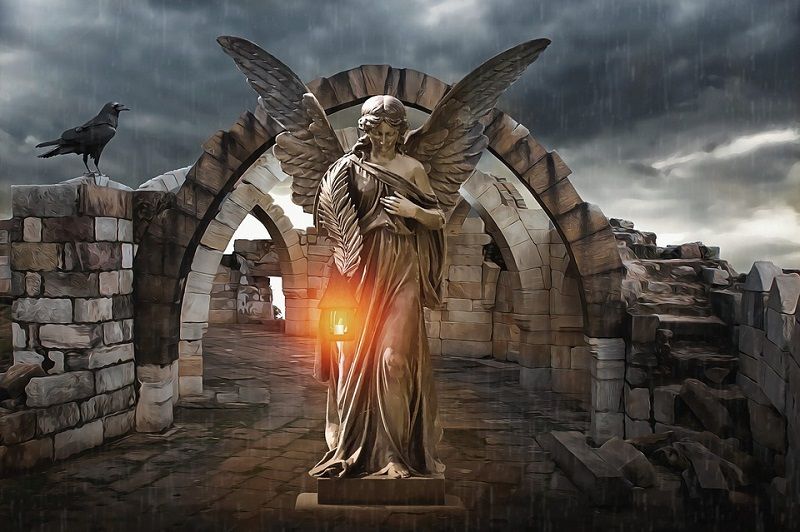
It is incredible to think of the similarities that exist today, the myth and reality are not very different, even when they are separated by many generations. This is a very interesting topic to investigate to observe the behavior of a society.
If you'd like to read more content like this, we invite you to explore our blog, where we have a wide variety of categories and original articles, full of entertainment and learning. We also invite you to read our latest article, " Summary of Helen of Troy."

We are interested in your opinion, so leave a comment with your thoughts about this article.