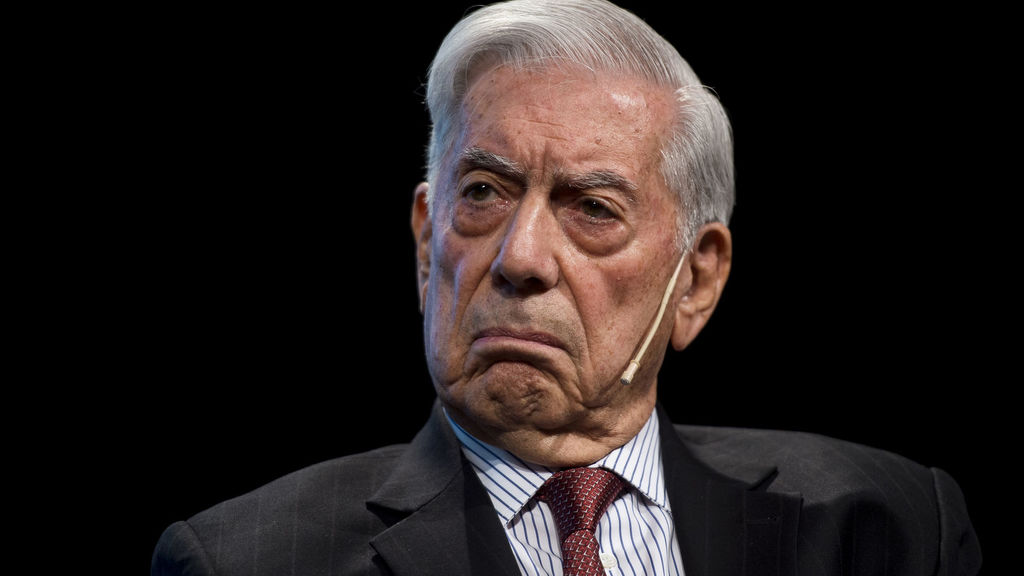
In this interesting article we will tell you the entire biography of the author Mario Vargas Llosa , an important Latin American writer, Nobel Prize winner in Literature and Doctor of Philosophy and Letters.

Learn about the history of the Nobel Prize for Literature Vargas Llosa
Life of Mario Vargas Llosa
Writer, journalist, politician, winner of the Nobel Prize in Literature and Doctor of Philosophy and Letters, Dr. Jorge Mario Pedro Vargas Llosa, better known as Mario Vargas Llosa, was born in Arequipa, Peru, on March 28, 1936. He is the son of Ernesto Vargas Maldonado and Dora Llosa Ureta; he has two half-brothers: Enrique and Ernesto Vargas.
Currently residing in Spain, he is known for writing major literary works, including , , and . You can learn more about his debut novel at .
Childhood
Born on March 28, 1936, into a middle-class family in the Peruvian city of Arequipa, he is the son of Ernesto Vargas Maldonado (Lima, 1905-1979) and Dora Llosa Ureta (Arequipa, 1914-1995). He was born during his parents' separation, who divorced shortly after his birth; his father, Ernesto Vargas, had two sons, Vargas Llosa 's half-brothers : Ernesto and Enrique Vargas.
Vargas Llosa lived his first year of childhood with his maternal family in Arequipa. In 1937, with the arrival of his maternal grandfather, Pedro J. Llosa Bustamante, his family moved him to the city of Cochabamba, Bolivia.
During his nine years, raised by his mother's family, he learned to read and write, studying up to fourth grade at Colegio La Salle. When Pedro Llosa Bustamante's first cousin, José Luis Bustamante y Rivero, obtained the presidency of Peru, he gave Pedro Llosa the position of prefect of the department of Piura, for which his entire family returned to Peru.
Already in Piura, Mario Vargas Llosa continues his primary studies at the Don Bosco Salesian School. At age 10, between 1946 and 1947, he ends up meeting his father, whom he maternal family made him believe that he had died.
If you want to read more about Latin American authors , Mario Vargas Llosa will surprise you with his literary career.
His parents, Ernesto and Dora, start a relationship again and move with Mario to Lima. In this city, he studies the sixth grade and the first two years of high school, at the La Salle School of the Congregation of Brothers of the Christian Schools.
A challenging adolescence
During part of his childhood and adolescence, Mario Vargas Llosa had to endure insults from his father: he repudiated his literary vocation, resented Dora Llosa's family and violently snatched. At the age of 14, Ernesto sends Mario to the Leoncio Prado Military School, located in El Callao, where he would study the third and fourth year of high school; It was during this time that he consolidated his vocation as a writer.
In the summer of 1952, he worked as a journalist for the newspaper La Crónica. That same year, he dropped out of military school and went to live with his uncle Luis Llosa in the city of Piura, where he finished his last year of high school. Also in Piura, he worked for the newspaper La Industria. A performance of his first play, "The Flight of the Inca," was held at the Variedades Theater, in which Mario participated.
Academic life
It is in the year 1953 when Mario enters the Universidad Nacional Mayor de San Marcos in the careers of law and literature. He was a member of the Cahuide group, a name used to keep alive the Peruvian Communist Party, persecuted by the government of Manuel A. Odría, which Mario opposed.
Later he belonged to the Christian Democratic Party, hoping that it would present José Luis Bustamante y Rivero as its candidate, a fact that did not happen.
At age 19, in 1955, he married his maternal aunt-in-law's sister, Julia Urquidi, who was 10 years older than him and was also divorced. This marriage caused the repudiation of his family, and his father, Ernesto, decided to raise the financing with which he supported Vargas Llosa, so both separated shortly after marriage.
Mario had to do several jobs simultaneously to survive, among which were: assistant to the librarian of the National Club, he wrote for some journalistic media and recorded names on tombstones in the Presbítero Matías Maestro Cemetery in Lima. Some time later he manages to improve his income by working as a journalist for Radio Panamericana.
In December 1956, he published his story "The grandfather", and two months later, in February 1957, he published the book of stories "The bosses", which awarded him the Leopoldo de Alas prize. His story "The Challenge" won first prize in a contest organized by La Revue Française, which awarded him a visit to Paris, where he traveled in January 1958 and lasted a month; That year he obtained a baccalaureate in Humanities with the merit of his thesis on «Bases for an interpretation of Rubén Darío».
If you are interested in learning more about his works , the specific article delves deeper into his most outstanding creations.
Europe
Mario obtains the Javier Prado scholarship that allowed him to continue pursuing postgraduate studies in Spain, at the Complutense University of Madrid. In 1960 the scholarship expires and Mario and Julia move to France with the hope that Mario will obtain a scholarship, which was rejected but he did not find out until he was already in France.
They stayed to live in Paris in poor financial condition and divorced in 1964. In 1965 Mario married Patricia Llosa Urquidi, his first cousin and maternal niece of his first wife; with Patricia he had three children: Álvaro, Gonzalo and Morgana Vargas Llosa.
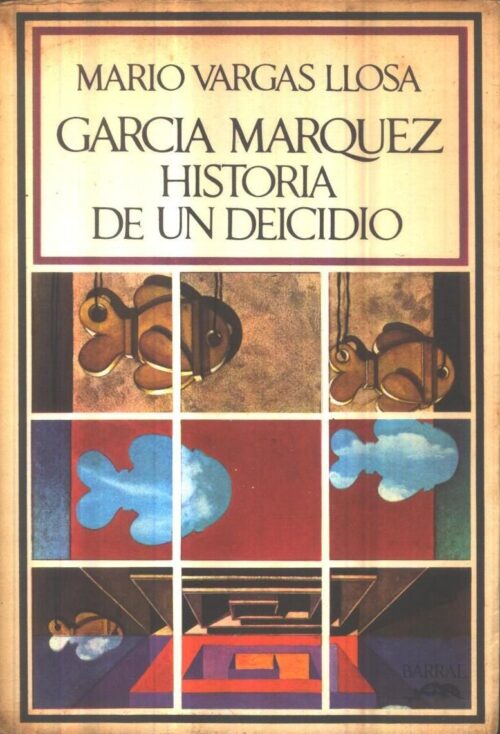
Under the tutelage of Professor Alonso Z. Vicente, Vargas Llosa obtained in 1971 the title of Doctor of Philosophy and Letters from the Complutense University of Madrid, with honorable mention cum laude, due to his doctoral thesis «García Márquez: language and structure of his narrative work", which would later publish it as "García Márquez: history of a deicide".
a literary life
While in Paris, he finished writing his first novel entitled "The city and the dogs", with which he obtained the Biblioteca Breve prize in 1962. In 1963, the Spanish publisher Seix Barral published his novel.
A few years later, in 1966, Carmen Balcells, then head of the publishing house's rights, after reading "The Green House," proposed to Vargas Llosa as her agent, raising funds for him while he finished writing his novel, "Conversation in the Cathedral." Balcells thus became Mario's agent.
In 1975 he was elected Full Member of the Royal Peruvian Academy of Language. A year later he was elected president of the International PEN Club, a position he held until 1979.
In 1984 he was president of the Investigative Commission of the Uchuraccay case, whose objective was to study and solve the case of the murder of eight journalists. At the end of the eighties, he entered Peruvian politics, including his candidacy for the presidential elections in Peru in 1990, for the center-right coalition Democratic Front (Fredemo): in the second round of the elections he lost to the agricultural engineer Alberto Fujimori.
In 1993 he obtained Spanish nationality. A year later, in 1994, he was appointed a member of the Royal Spanish Academy, and won the Miguel de Cervantes Prize, the highest award given to writers of the Spanish language who enrich its literary heritage; also in 1994 he is recognized by various universities as doctor honoris causa.
In 2010 he was awarded the Nobel Prize for Literature for his "Cartography of the structures of power and its images of resistance, rebellion and defeat of the enemy". In 2011 he received from Juan Carlos I of Spain the title of Marquis in the protocol treatment of Illustrious Lord.

Vargas Llosa and his literary work
This important writer, who has been awarded many times for his literary works, among which the Nobel Prize for Literature and the Miguel de Cervantes Prize stand out, is defined among a generation of writers as one of the most complete of his time, standing out in the world of Latin American literature.
He began his journey in literature at the age of 16 in Piura, Peru, with a dramaturgical work entitled "La huida del Inca" and some literary stories. However, it was not until the 1957s that he began to be recognized and become more relevant, despite having previously won awards for his works, such as the Leopoldo Alas award in 1962, and the Biblioteca Breve award in XNUMX, which gave him his first novel entitled "The city and the dogs".
Most outstanding works of Vargas Llosa
Among Mario Vargas Llosa's most outstanding stories, novels, plays, and books , we can find texts that have captivated critics from various countries, earning him countless awards. Some of these works include:
The city and the Dogs
This was the first novel by the Peruvian author, and the one that awarded him the Biblioteca Breve prize in 1962 and the Spanish Critics Prize: Mario is inspired by this novel due to his experiences as a teenager in the military boarding school: This takes place in the Leoncio Prado Military School, located in El Callao. Originally, Vargas Llosa had titled it "The dwelling of the hero" and later, "The impostors".
This novel, along with other works by various authors, launched the so-called "Latin American Boom," a period when a large number of novels and other works by Latin American authors were distributed throughout Europe and the rest of the world. You can read a full review of *The City and the Dogs* that analyzes its main points.
The War of the End of the World
In the book published in 1981, he recreates the War of Canudas of 1887. The plot takes us to the Brazilian northeast, in an apocalyptic narrative, as the end of the world is possibly approaching due to the turn of the century, and the environment is hit by droughts and pests.
The green House
The plot takes place in Piura, a city where the existence of a brothel-house, called "La casa verde", affected the lives of the characters: The story tells us about "Bonifacia", who had been expelled from a convent to later become in «La selvatica», the most famous prostitute in the house.
The novel is characterized by the adoption of European and North American literary techniques that were developed during the first half of the XNUMXth century; the work managed to obtain the Rómulo Gallegos award.
Conversation in the cathedral
Published in 1969, it is recognized as one of his greatest works, being included in the list of the 100 best novels in Spanish of his century by the newspaper El Mundo. It was written in Paris, Washington, Lima, Puerto Rico and London and, due to the length of its pages, it was intended to be published in two parts, but it was only published in the first edition.
The party of the goat
The story that the author narrates takes place in the Dominican Republic and focuses on the assassination of its dictator, called "Rafael L. Trujillo" and the following events from two points of view, with a generational difference: the first, during, and moments after the murder; the second, 35 years later. He makes a wide reflection during the text on the height of the dictatorship, and also of the importance of this one in the Dominican Republic.
A Fish in the Water
In this autobiographical book published in 1993, Mario recounts his memories; he explains two important periods of his life: The first describes his childhood, the years between 1946 and 1958, which recounts his relationship with his father, and his beginnings in literature. In the second period he recounts his life in his political career and the events that occurred during his candidacy for the presidency of Peru.
García Márquez: story of a deicide
With this work, published in 1971, Vargas Llosa was able to obtain Pho-Philosophy and Letters at the Complutense University of Madrid, but under the title of "García Márquez: Language and structure of his narrative work"; With this work he obtained the honorable mention cum laude. In the text, he makes a deep analysis of the entire work of the author Gabriel García Márquez, which goes from his beginnings to "One Hundred Years of Solitude."
In this video you will see a summary of the 10 most outstanding books by the author and Nobel Prize winner, Mario Vargas Llosa:
https://www.youtube.com/watch?v=EN4QuCZCeFA
This author has written countless literary works. Vargas Llosa's latest book is titled "Tiempos recios" (Harsh Times), a novel he published in 2019: The work narrates the history of Guatemala in the mid-20th century.
Distinctions: Vargas Llosa Awards
From a very young age, Vargas Llosa has obtained innumerable awards and distinctions, of which the following stand out:
- Nobel Prize in Literature, 2010, for "Cartography of the structures of power and its images of resistance, rebellion and defeat of the enemy."
- Miguel de Cervantes Prize, 1994.
- Rómulo Gallegos, 1967, for «The Green House».
- Prince of Asturias of Letters, 1986.
If you love to read, we have a special article for you about the best William Shakespeare books you should read, which you definitely won't want to miss.